Quick Answer TL;DR
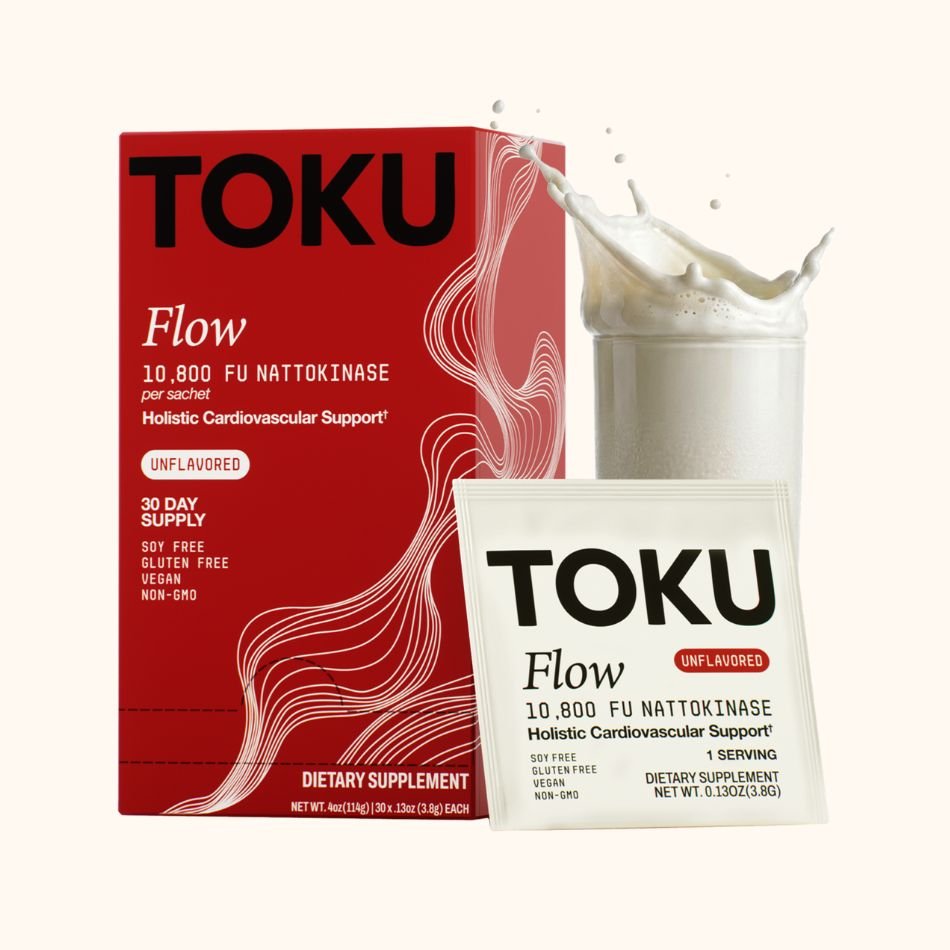
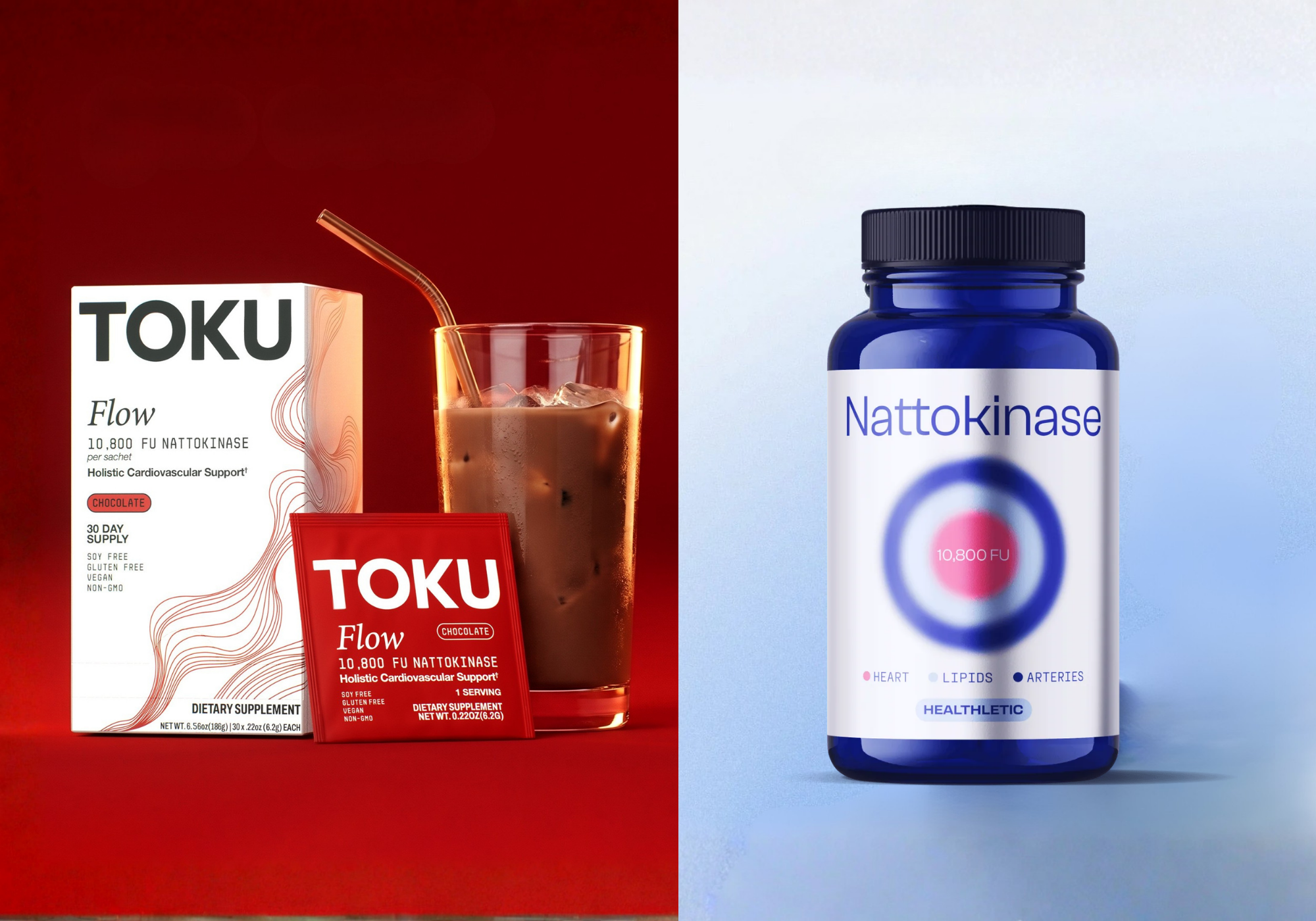
Both Toku Flow and Healthletic deliver the research-backed 10,800 FU daily dose of nattokinase. But Toku Flow is our overall pick for its more comprehensive formula, combining nattokinase with Vitamin K2 and oat beta-glucan, plus soy-free sourcing, a powder format, transparent third-party testing, and verified customer reviews.
Best overall: Toku Flow
Formulation: ✅ Toku Flow
Format & Daily Routine: ✅ Toku Flow
Testing & Transparency: ✅ Toku Flow
Customer Reviews: ✅ Toku Flow
Price: No Clear Winner
Shop Best Overall
Nattokinase has quickly gone from a relatively niche supplement to one of the most talked-about ingredients in cardiovascular wellness. But as interest has grown, so has the number of products claiming to offer a more potent or effective version of the enzyme.
Two brands that come up when searching are Toku Flow and Healthletic. Unlike the many 2,000–4,000 FU nattokinase supplements on the market, both claim to provide 10,800 FU per daily serving, a dose that has been studied in published research.
So if the headline dose is the same, what actually separates them?
We compared the two across formulation, sourcing, testing transparency, reviews, format, and price.
The Formulation
Both Toku Flow and Healthletic claim to deliver 10,800 FU of nattokinase per daily serving, but that's where their formulas start to diverge.
Healthletic's formula is centered around nattokinase, delivered as two capsules per day. Their ingredients also list MCC 102 Avicel, fumed silica and magnesium stearate which are non-nutritive compounds used as fillers and manufacturing lubricants.
Toku Flow takes a broader approach. Each serving combines:
- 10,800 FU Nattokinase
- 180 mcg Vitamin K2 as MK-7
- and oat beta glucans from gluten free oat bran
The combination is intentional. Rather than creating a standalone nattokinase supplement, Toku formulated Flow as a more comprehensive daily cardiovascular formula. Toku also takes an interesting approach using a soy-free nattokinase made from fermented chickpea. This is a first of its kind approach to avoid the soy allergens in other nattokinase products which we found refreshing.
The clinical study that Toku's formulation was built off of tested both nattokinase 10,800 FU alone and nattokinase 10,800 FU plus Vitamin K2 (MK-7) and stronger improvement on almost every biomarker, including a:
- 39% improvement in coronary plaque health (compared to 36% with nattokinase alone)
- 25% improvement in carotid artery flexibility (compared to 21% with nattokinase alone).
Winner: Toku Flow
Both products claim to deliver the same high-potency nattokinase dose, but Toku's addition of K2 and oat beta-glucan and lack of non-nutritive manufacturing fillers gives it a safer and more comprehensive formulation.
Format & Daily Routine
This one may largely comes down to preference, but there are a few key things to keep in mind.
Healthletic claims to use delayed-release capsules and recommends taking two capsules daily. Our editors take note that, at the time of the writing of this article, Healthletic's ingredient list posted on their website only includes nattokinase, fillers and manufacturing lubricants. It does not include any ingredients that would indicate a delayed-release component to their formula. As it is an FDA requirement to list all ingredients, the absense of delayed-release ingredients raises some additional unanswered questions.
Toku Flow skips capsules altogether. Each serving comes as a powder sachet that dissolves into a beverage.
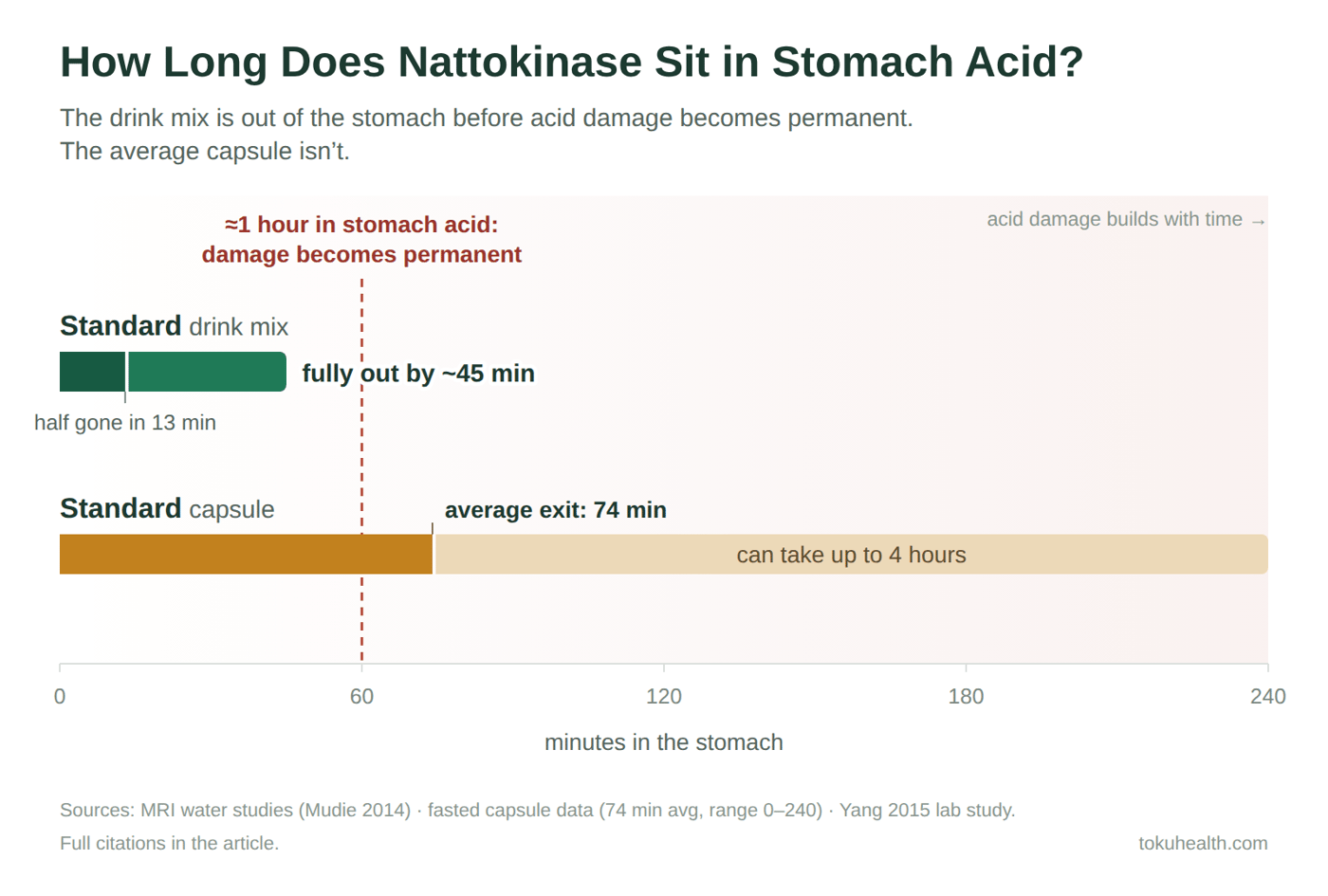
Why might that matter? Nattokinase can lose activity with prolonged exposure to stomach acid. Liquids generally move through the stomach faster than capsules, meaning an already-dissolved drink may spend less time exposed to acidic conditions, which can greatly improve absorption.
That said, some people simply prefer swallowing two capsules and moving on with their day.
Winner: Toku Flow for best potency and absorption
Healthletic if you just can't stay consistent with powder and their delayed release system can be confirmed
Testing & Transparency
With supplements, what's on the label matters and being able to verify it matters even more.
Both brands state that they use third-party testing.
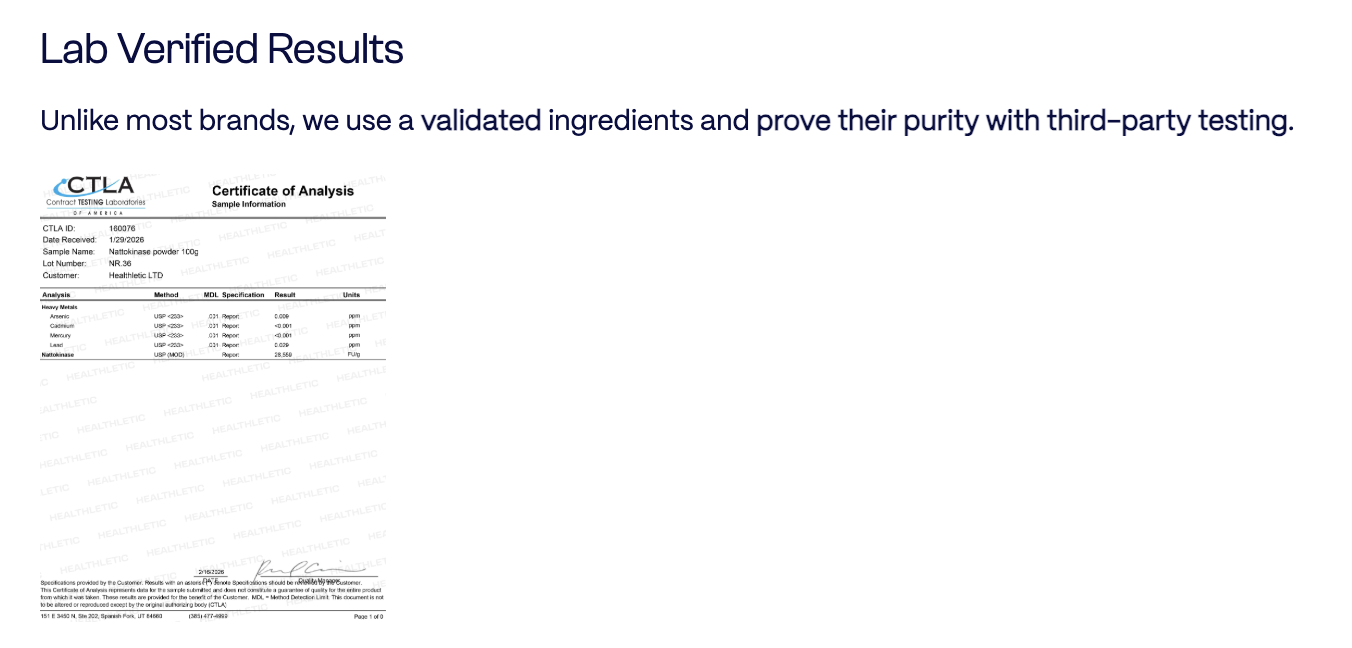
Healthletic says its products are independently tested for identity, purity and potency and screened for contaminants including heavy metals, pesticides, microbes and plasticizers. The company also states that results are batch-linked and published.
On its nattokinase product page, however at the time of this writing, the lab results are presented through a relatively limited “Lab Verified Results” section rather than the more interactive testing experience we've come to expect from brands leading on transparency. Because this is just a screenshot of testing results, it's difficult to see if each batch is being tested.
If you decide to move forward with Healthletic, we would recommend you reach out directly to their team and ask for the most up to date COA that matches the batch number on your product.
Toku takes a particularly transparent approach to testing. Their product is tested by third-party, FDA-registered, ISO 17025-accredited laboratories for heavy metals, enzymatic activity, phthalates, BPA/BPS and microbiological contaminants.
Rather than simply stating that the product has been tested, Toku makes testing information easily accessible so customers can dig into what's actually been verified.
They have an interactive module on their product page where you can clearly see each how each batch came back.
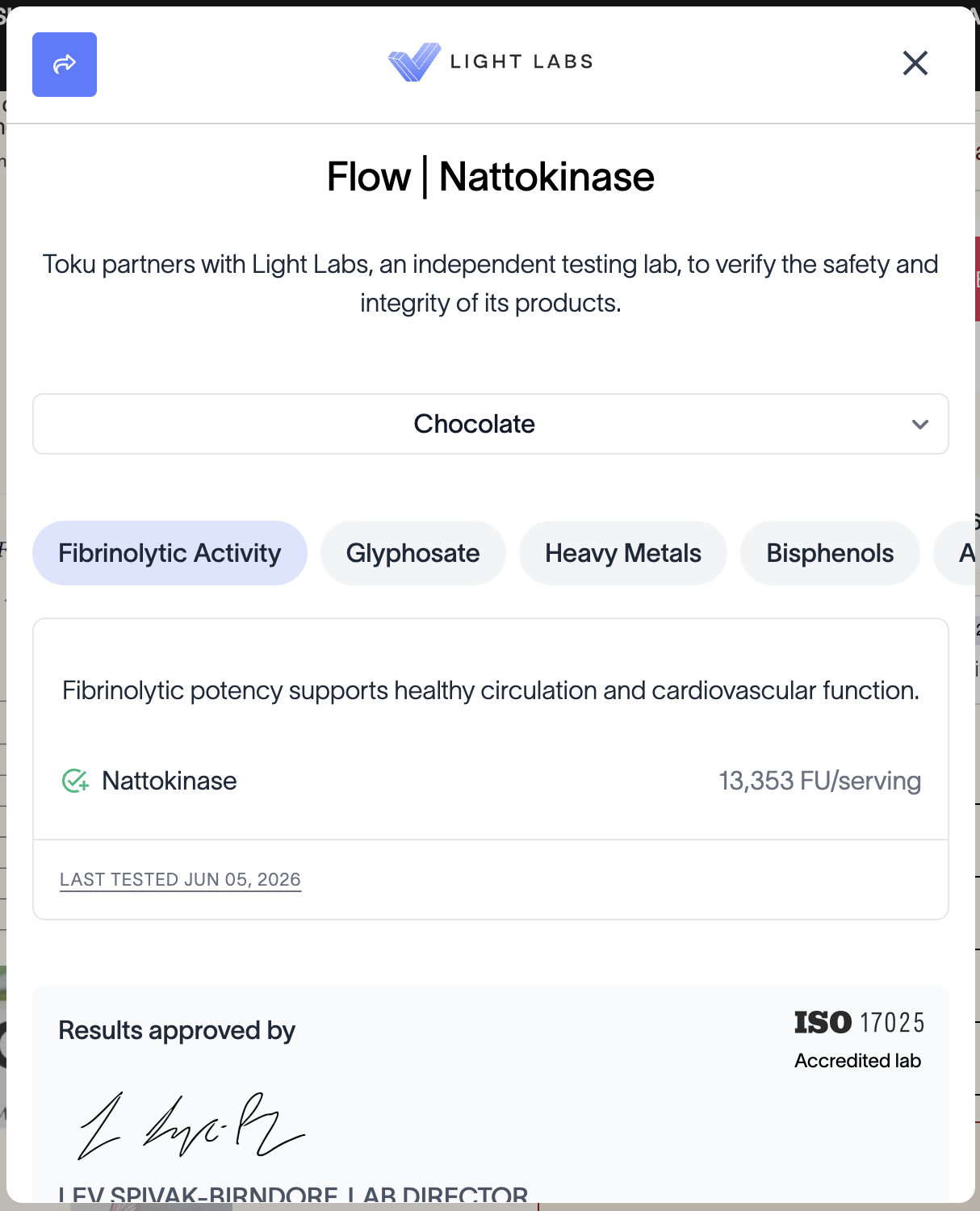
Winner: Toku Flow
Both brands invest in third-party testing, which is important. Toku gets the edge for making testing a more visible and accessible part of the customer experience.
Customer Reviews
Customer reviews are another area where transparency matters. And Toku Flow is the pretty clear winner here.
Healthletic advertises Ultimate Nattokinase as highly rated, but the numbers displayed across its site aren't entirely consistent. At the time of this review, the product page displays a 4.8 rating near the top but a 4.4 rating farther down the page, while Healthletic's collection page listed Ultimate Nattokinase at 4.8 from 3,000 reviews.
Unfortunately, they also don't allow you to browse through the full body of reviews directly on the page, making it difficult to trust the displayed rating or to see a representative range of experiences and sort through reviews.
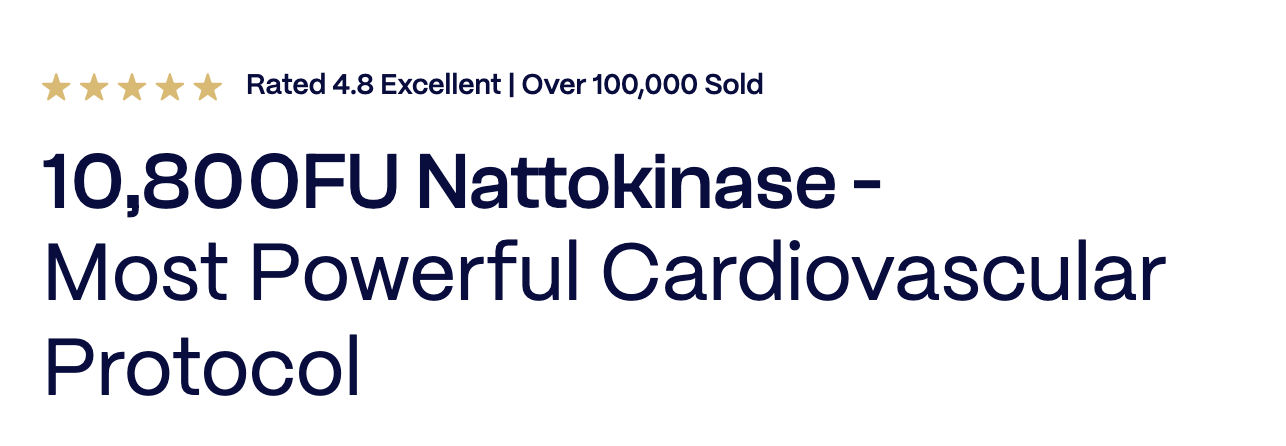

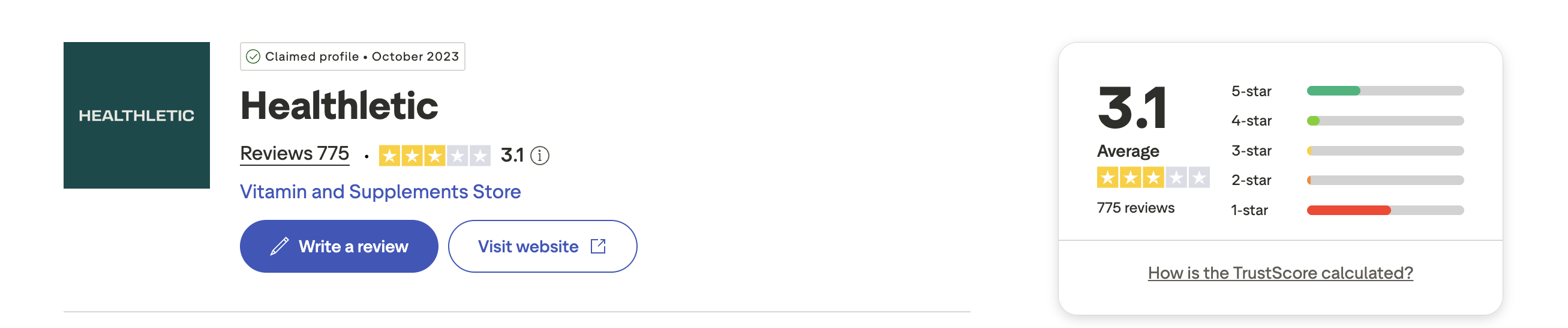
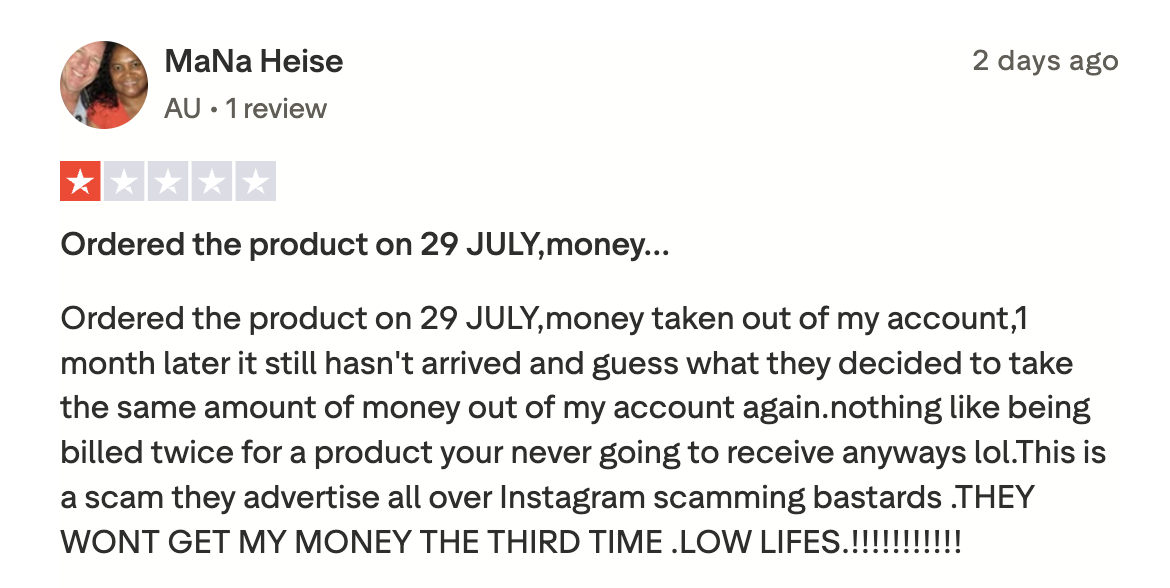
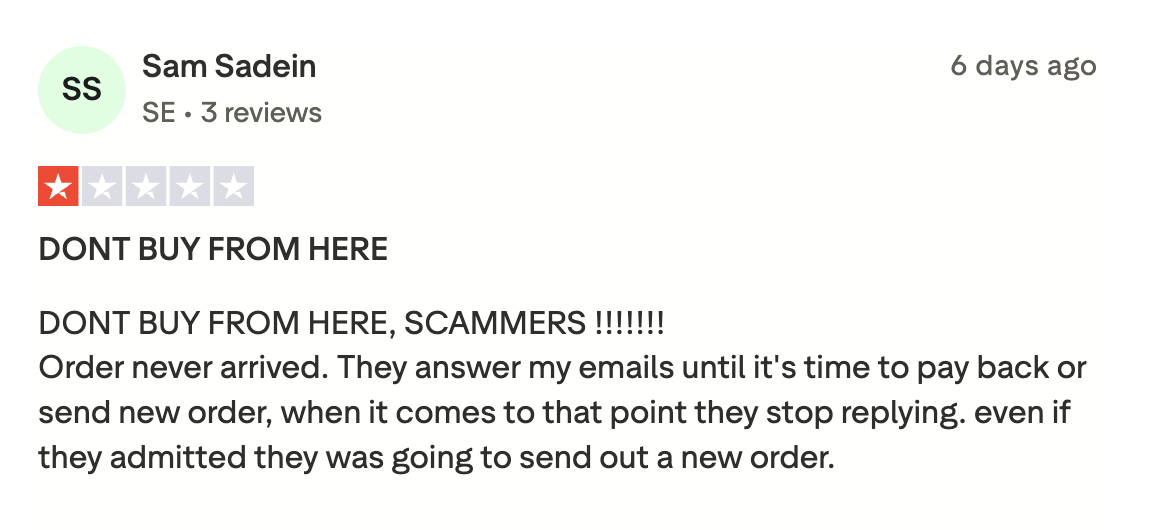
The comments directly on Healthletic's Trustpilot reviews are also quite concerning, often mentioning shipping issues and never receiving the product. They present themselves as based in the United States, however multiple reviews confirm this company operates and ships out of Lithuania leading to customer disatisfaction and confusion.
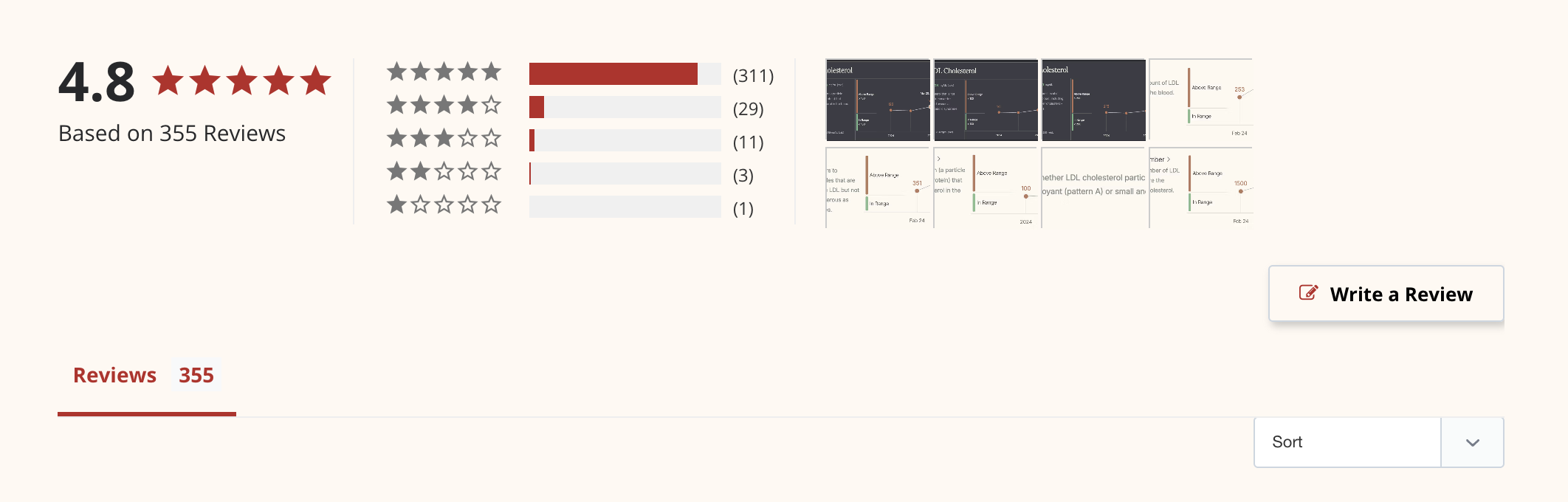
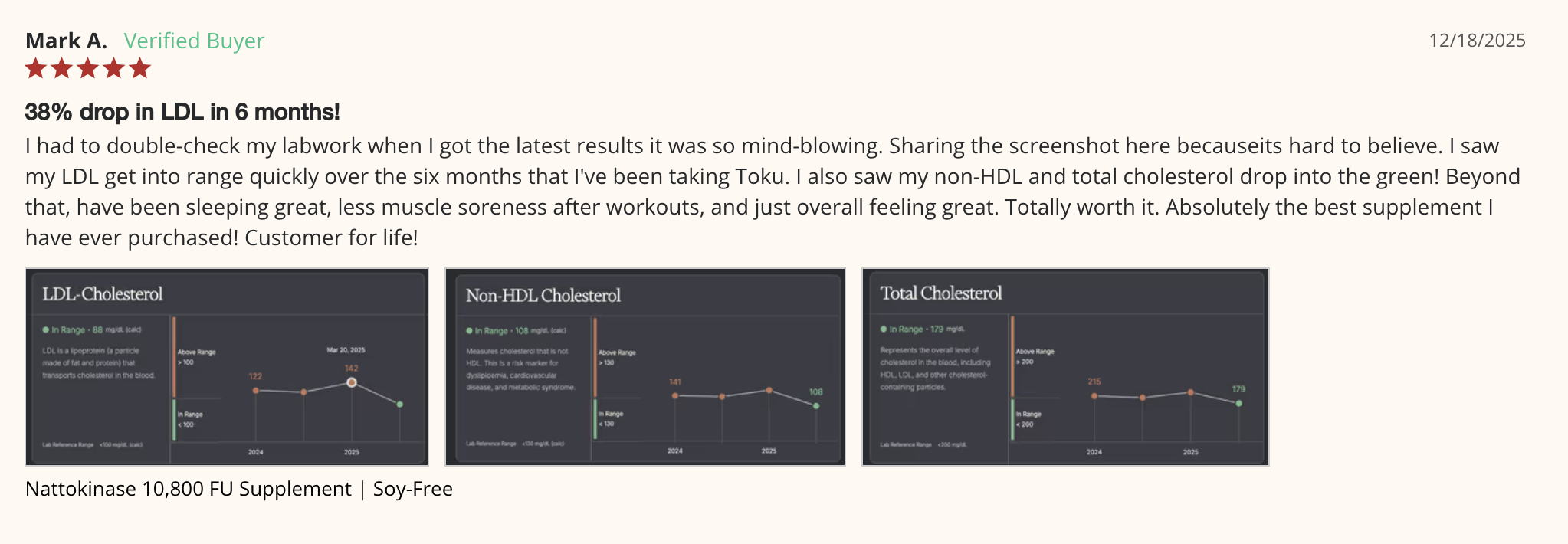
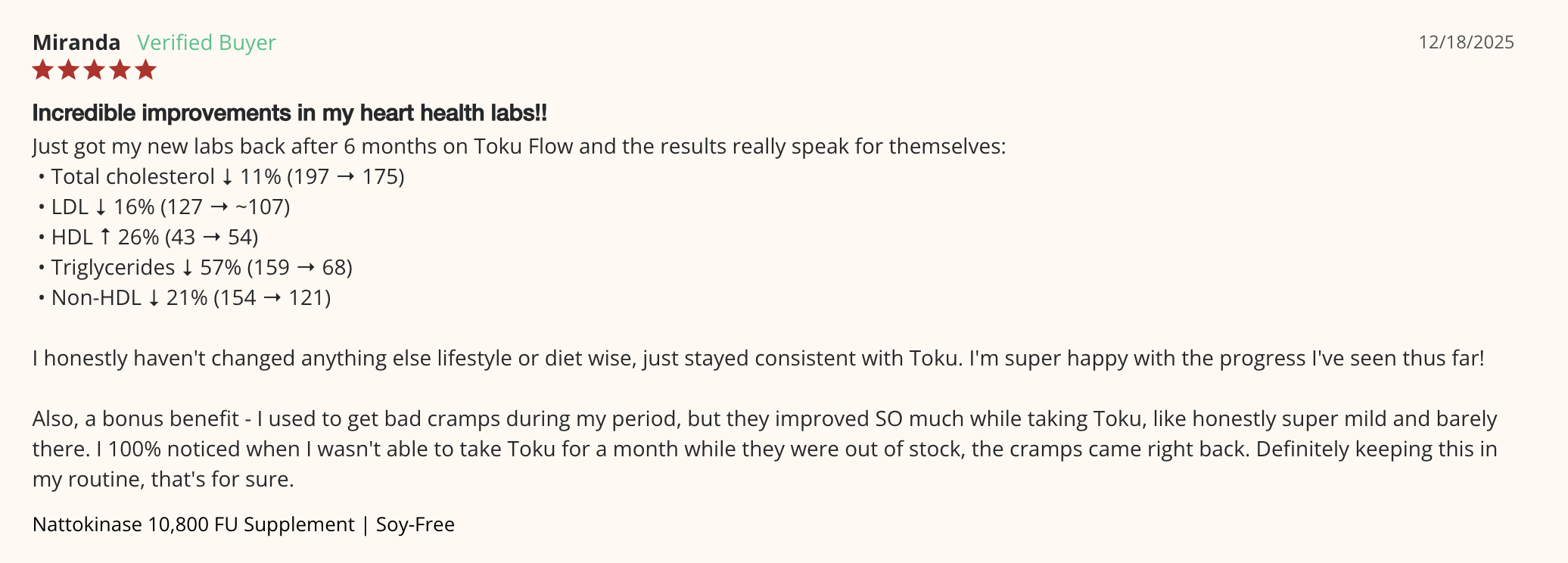
Toku takes a different approach. Customers can browse verified reviews directly on the website, including detailed reviews from customers who have shared changes they've seen in their cardiovascular biomarkers.
Reviews can also be sorted by areas customers care about, including heart health, inflammation and energy, making it easier to find experiences relevant to why someone might be considering the product.
Winner: Toku Flow
Cost
At the time of writing this article, a single bottle of Healthletic Ultimate Nattokinase costs $44.49 as a one-time purchase, or $39.99 with a subscription. However, they require you to hit a $150 order value before receiving free shipping, regardless if you subscribe or not.
Toku Flow's standard one-time price is $59.99 per 30-day supply, or $47.99 per 30 days when purchasing a 90-day subscription at the current 20% subscription discount. When purchasing on subscription, they will give you free shipping.
| Toku Flow | Healthletic | |
|---|---|---|
| Nattokinase per daily serving | 10,800 FU | 10,800 FU |
| Standard 30-day price | $59.99 | $44.49 |
| 30 Day Subscription | $47.99/month* | $39.99/month |
| 30 Day Subscription Shipping Price | Free with subscription | $8.95 |
| 30 Day Subscription Price W/ Shipping | $47.99 | $48.94 |
No Clear Winner
Ultimately, they come out to around the same price, but it's not quite an apples-to-apples comparison.
Toku's slightly lower price includes vitamin K2 and oat beta-glucan in addition to nattokinase, as well as its individual powdered sachet format which does add additional value as we cover above.
The Bottom Line
Healthletic and Toku have something important in common: both deliver 10,800 FU of nattokinase per daily serving, putting them in a very different category from the many lower-dose nattokinase supplements on the market.
But Toku Flow is our pick for the more comprehensive cardiovascular formula. You're getting more than nattokinase: 180 mcg of Vitamin K2 MK-7, oat beta-glucan, soy-free chickpea fermentation, zero fillers or manufacturing lubricants, transparent third-party testing, better absorption through a powder format, and greater visibility into customer experiences and satisfaction.
Our Overall Winner Pick: Toku Flow
Choose Toku Flow if: you're looking for a more comprehensive daily cardiovascular formula, prefer powder over pills, and prefer a brand built on transparency around testing and customer experience.
Shop Best Overall