How Nattokinase Affects Cholesterol
Nattokinase is a natural enzyme extracted from natto, a traditional Japanese food made from fermented soybeans. It has been studied for cardiovascular health primarily because of its fibrinolytic properties, its ability to break down fibrin, a protein involved in blood clot formation and arterial plaque accumulation.
When excess fibrin builds up in blood vessels, it creates an inflammatory environment that allows LDL cholesterol to oxidize and adhere to arterial walls. By reducing fibrin buildup and supporting healthier circulation, nattokinase addresses conditions that contribute to lipid-related risk, not just the numbers on a lipid panel.
This is why clinical researchers studying nattokinase for cardiovascular outcomes didn’t just measure clotting markers. They measured the full lipid panel. And the results at the right dose were meaningful.
What the Research Actually Shows
The most rigorous human trial on nattokinase and cholesterol to date is the 2022 study by Chen et al., conducted over 12 months with 1,062 participants. At a daily dose of 10,800 FU of nattokinase, the lipid improvements were clinically significant:
- Approximately 15–16% reduction in LDL cholesterol
- Approximately 17.6% reduction in total cholesterol
- Approximately 16.5% reduction in triglycerides
- Meaningful improvements in the HDL-to-LDL ratio
Critically, a group in the same trial receiving 3,600 FU daily showed no significant lipid improvements. A 2023 meta-analysis aligned with this finding: low-dose nattokinase showed no significant lipid-lowering effects.
The dose is not a minor variable. It determines whether the supplement produces any measurable result at all.
LDL, HDL, and Triglycerides — What Nattokinase Actually Targets
The strongest clinical evidence is for LDL reduction and triglyceride reduction, the two markers most commonly elevated in individuals managing cardiovascular risk.
For HDL cholesterol, the “good” cholesterol, nattokinase supports improvement indirectly. Rather than directly raising HDL levels, it improves the overall lipid environment by reducing LDL and supporting healthier circulation. The Chen et al. trial showed meaningful improvements in lipid ratios, suggesting a positive effect on overall cholesterol balance.
How Nattokinase Compares to Statins
Statins are the most commonly prescribed cholesterol-lowering medications in the world. They work by blocking an enzyme in the liver that the body uses to produce cholesterol, directly reducing LDL synthesis. They’re fast-acting and well-studied for acute cardiovascular risk reduction.
Nattokinase works through a completely different pathway. Rather than suppressing cholesterol production, it addresses the vascular conditions that allow cholesterol-related damage to accumulate. By breaking down excess fibrin, it reduces the inflammatory arterial environment that encourages LDL oxidation and plaque formation.
Nattokinase is not a replacement for a statin. Anyone currently on statins or other lipid-lowering medications should speak with their doctor before adding nattokinase to their routine, particularly given nattokinase’s fibrinolytic activity, which may interact with certain cardiovascular drugs.
What the research does show, at the right dose, is that nattokinase can independently move lipid markers in a meaningful direction through a mechanism entirely separate from statin therapy. For individuals managing cholesterol proactively, it offers a research-backed option that works differently from anything else on the supplement shelf.
Why Most Nattokinase Supplements Won’t Move Your Cholesterol & How Much Nattokinase Per Day For Cholesterol Support?
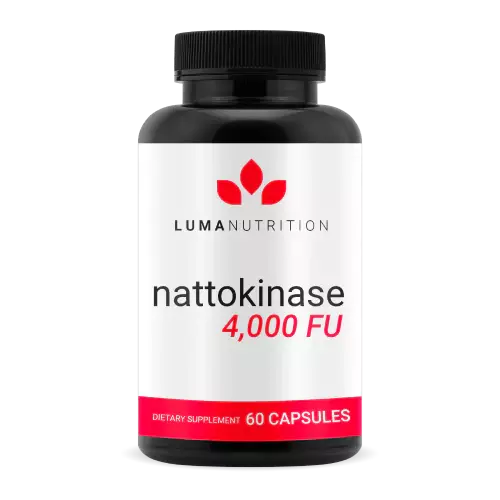
The standard nattokinase supplement on the market contains 2,000 FU per serving. The dose associated with meaningful cholesterol improvements in the best available clinical research is 10,800 FU, more than five times higher.
This isn’t a small gap. The same trial that demonstrated benefits at 10,800 FU showed that 3,600 FU, already nearly double what most supplements provide, was insufficient to produce significant lipid changes. A supplement dosed at 2,000 FU is not a lower-potency version of the same therapy. It is a dose the available evidence has effectively ruled out.
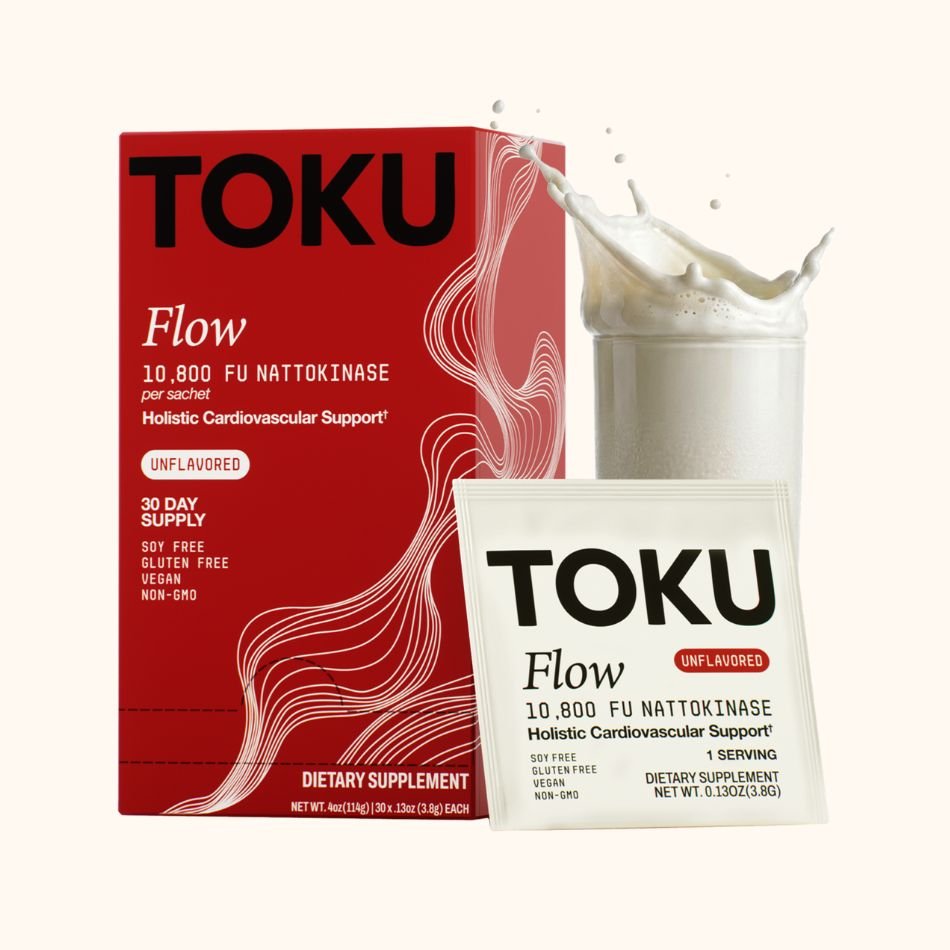
Most brands set their dosing based on manufacturing cost and market norms, not on clinical thresholds. The result is a shelf full of products that technically contain nattokinase but at doses too low to replicate what researchers studied. If you're looking for a clinically relevant dose of nattokinse, we recommend checking out Toku Flow, containing the full 10,800 FU clinical dosage.
Frequently Asked Questions
Can nattokinase lower LDL cholesterol?
Clinical research suggests it can at the right dose. The 2022 Chen et al. study found approximately 15–16% reductions in LDL cholesterol at 10,800 FU daily over 12 months. Lower doses, including 3,600 FU, nearly double the market standard, showed no significant LDL improvements in the same trial.
Does nattokinase affect HDL cholesterol?
The evidence points to indirect improvements. Rather than directly raising HDL levels, nattokinase appears to improve the HDL-to-LDL ratio by reducing LDL and supporting a healthier vascular environment. The Chen et al. study showed meaningful improvements in overall lipid balance including HDL related markers.
How long does nattokinase take to affect cholesterol?
The landmark clinical trial ran for 12 months, and meaningful cholesterol improvements were measured at that timeframe. Nattokinase works over time through consistent fibrinolytic activity, it is not a rapid-acting lipid-lowering intervention. We recommend taking nattokinase for at least 3 to 6 months before re-testing your lipid markers.
Is nattokinase safe to take alongside cholesterol medications?
Nattokinase has fibrinolytic properties that may interact with blood thinners and certain cardiovascular medications. Anyone currently managing cholesterol with prescription drugs should consult their doctor before adding nattokinase to their routine.