Quick Answer: The Right Nattokinase Dose Is 10,800 FU Per Day
The largest clinical study on nattokinase, 1,062 participants for 12 months, found that 10,800 FU per day significantly reduced atherosclerosis and improved lipid profiles. A lower dose of 3,600 FU per day was tested in the same study and found completely ineffective.
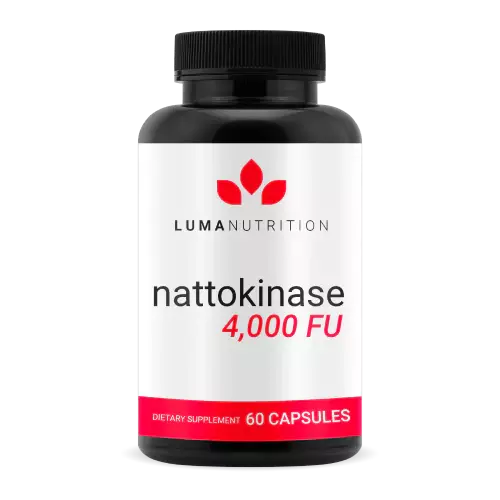
The problem: most supplements on the market contain 2,000 FU. That's one-fifth of the clinical dose, and less than the dose the research already ruled out.
If your supplement doesn't list FU on the label, or lists anything under 10,800 FU, it's not matching what the science used.
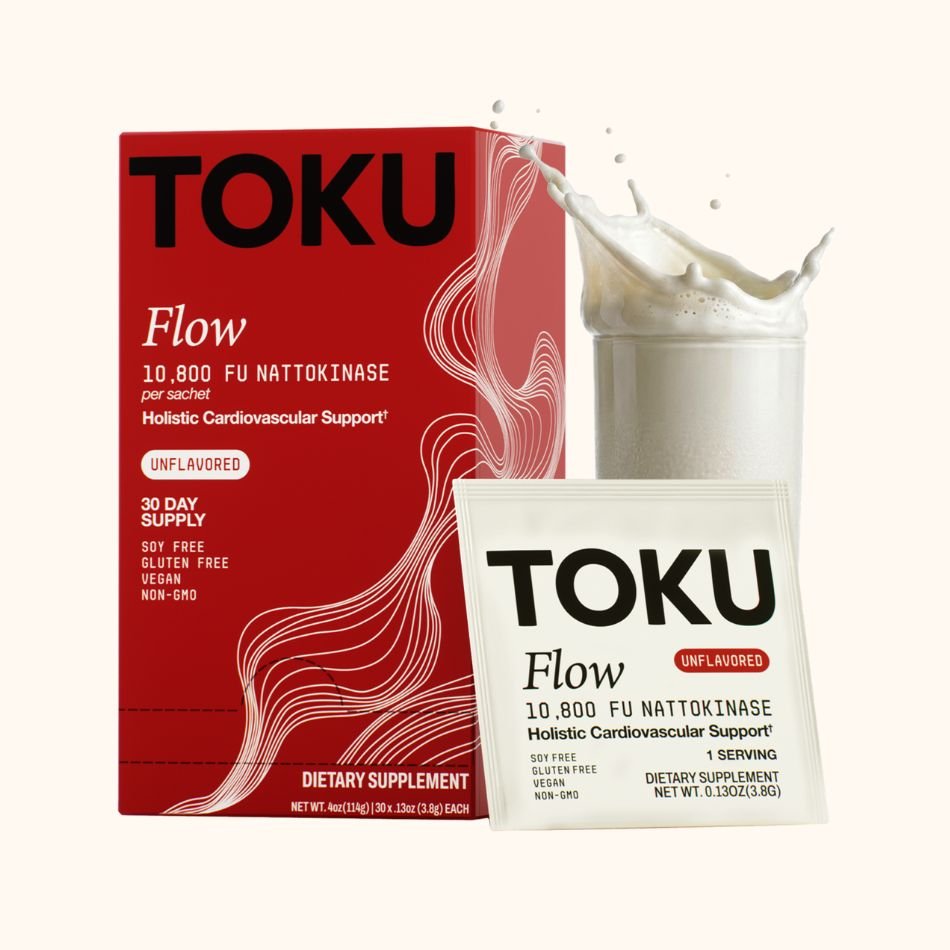
Only one nattokinase supplement currently offers 10,800 FU in a single serving, Toku Flow.
The Number on the Label Might Be Misleading You
If you've been taking nattokinase and not noticing results, the answer may be simpler than you think: dosing.
Most nattokinase supplements on the market contain 2,000 FU (Fibrinolytic Units) per serving. That number has become the de facto industry standard. But it wasn't set by clinical research. It was set by manufacturing economics.
What FU Actually Means
Nattokinase is an enzyme, and enzymes are measured by activity, not weight. Milligrams tell you how heavy something is. Fibrinolytic Units tell you how well it actually works.
Two nattokinase products can show identical milligram counts on their labels while delivering completely different enzymatic activity. This is why FU is the only number that matters — and why a supplement advertising "500mg of nattokinase" tells you almost nothing useful about what you're actually getting.
What the Research Actually Shows
The most comprehensive human trial on nattokinase dosing to date is a 2022 study by Chen et al., conducted over 12 months with 1,062 participants. The results were striking:
- 10,800 FU daily significantly reduced atherosclerosis progression and improved lipid profiles
- 3,600 FU daily showed no meaningful improvements despite being nearly double the amount found in most commercial supplements
A 2023 meta-analysis reinforced the pattern: low-dose nattokinase had no significant lipid-lowering effects.
The standard 2,000 FU dose sits at roughly one-fifth of the amount that produced meaningful results in the strongest clinical evidence available. That gap is hard to ignore.
Why Most Supplements Are Underdosed
Higher FU counts require more enzyme per capsule, which costs more to produce. Most brands optimize for price point and margin, not for matching the doses researchers actually study. The result: shelves full of products that technically contain nattokinase, priced accessibly, and dosed too low to replicate what the science used.
How Much Nattokinase Should You Take Per Day?
The most rigorous human trial to date — the 2022 Chen et al. study — used 10,800 FU of nattokinase daily over 12 months. That is the nattokinase dosage per day that produced significant reductions in atherosclerosis progression and lipid improvements across 1,062 participants.
Research suggests a minimum effective threshold of around 6,000–8,000 FU per day. The standard industry dose of 2,000 FU sits well below this range. Taking 2,000 FU nattokinase daily is not the same as taking a clinically studied dose — even if the label looks similar.
If you're evaluating a supplement, look for a product that lists at least 6,000 FU per serving, ideally 10,800 FU to match the landmark research.
Frequently Asked Questions
Is 2,000 FU nattokinase enough?
Based on available clinical research, 2,000 FU is unlikely to produce meaningful cardiovascular benefits. The landmark 2022 Chen et al. study used 10,800 FU daily, and a 3,600 FU dose in the same trial showed no significant improvements. Most experts suggest a minimum of 6,000–8,000 FU per day.
What does FU mean in nattokinase supplements?
FU stands for Fibrinolytic Units — a measure of enzymatic activity, not weight. Unlike milligrams, FU tells you how effectively the nattokinase enzyme can break down fibrin. Two supplements with identical milligram counts can have vastly different FU values and therefore very different effects.
How much nattokinase should I take per day?
Clinical research points to 10,800 FU per day as the dose associated with meaningful outcomes, based on the 2022 Chen et al. 12-month trial. A minimum of 6,000 FU per day is generally considered the lower threshold for potential benefit.
Why are most nattokinase supplements underdosed?
Higher FU concentrations cost more to produce. Most supplement brands optimize for price point and margin rather than clinical relevance, resulting in products that technically contain nattokinase but at doses too low to replicate what researchers study.